

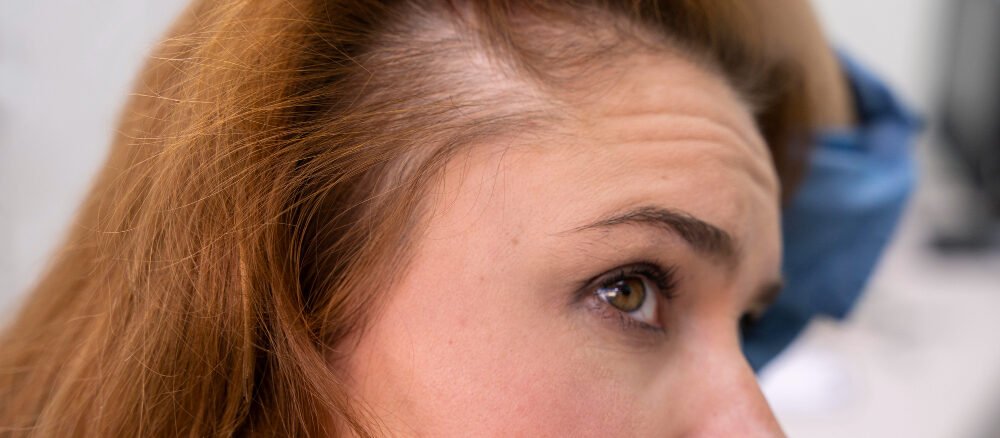
Hair shedding is a normal part of the hair growth cycle. However, when you begin noticing excessive shedding, visible thinning, widening of the part line, a receding hairline, or bald patches, it may indicate that something is affecting the normal hair-growth cycle.
Hair loss can happen for many different reasons. Genetics, hormonal changes, nutritional deficiencies, medical conditions, stress, medications, scalp disorders, and certain treatments can all play a role. In some people, more than one factor may contribute to hair thinning.
Because the cause of hair loss differs from person to person, identifying the underlying reason is an important part of deciding what treatment may be appropriate.
If you are concerned about persistent hair shedding or thinning, understanding the common causes of hair loss can help you know when it may be time to seek professional advice.
Is Hair Shedding Normal?
Some daily hair shedding is normal.
Hair naturally goes through different stages of growth and rest. At the end of the resting phase, individual hairs can fall out and eventually be replaced by new hairs.
The American Academy of Dermatology explains that losing some hair every day is normal, but excessive shedding can become noticeable when the amount of hair being lost increases significantly.
You may notice normal shedding while:
Washing your hair
Brushing or combing
Styling your hair
Showering
Changing your hairstyle
The important factor is whether your pattern of shedding has changed.
If you suddenly notice considerably more hair than usual, visible thinning, bald patches, or a change in your hairline, it may be worth discussing the problem with a dermatologist.
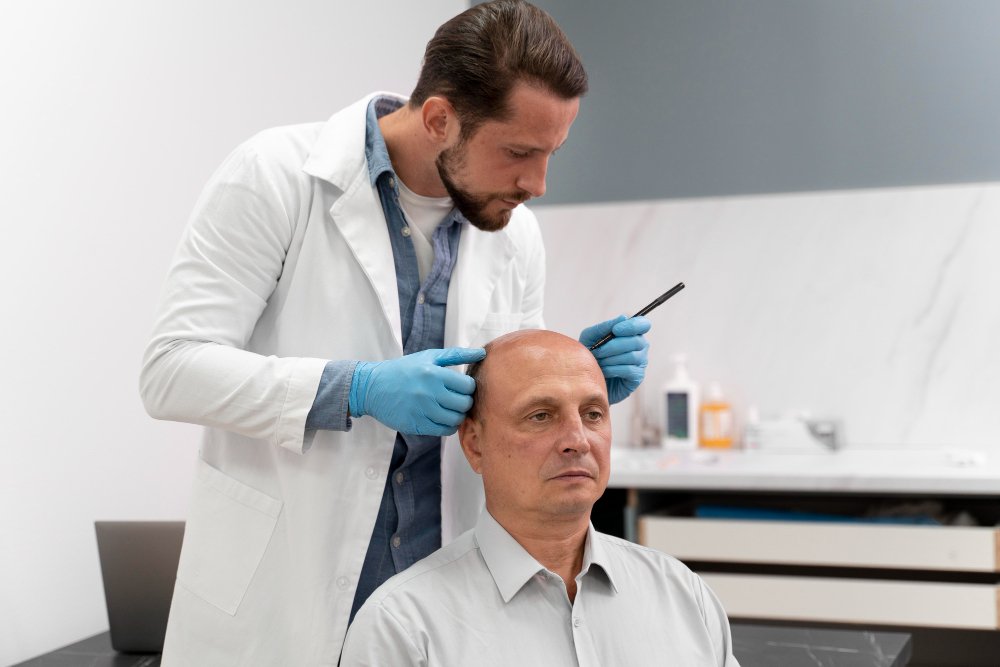
Is PRP Used for Hair Loss?
Platelet-rich plasma, commonly known as PRP, is one treatment that may be considered for certain types of hair loss. PRP involves processing a patient’s blood to obtain a platelet-rich component and then administering it to the targeted area according to the treatment protocol. Research has investigated PRP as a treatment for androgenetic alopecia, although outcomes can vary and treatment protocols are not identical. PRP should therefore be considered only after appropriate assessment rather than presented as a universal solution for hair loss.
What Is Hair Loss?
Hair loss refers to a reduction in the amount of hair on the scalp or other areas of the body.
It can occur gradually or suddenly and may appear in different patterns.
Some people experience diffuse thinning across the scalp, while others develop a receding hairline or a distinct bald patch.
Hair loss can also be temporary or persistent depending on the underlying cause.
Common patterns include:
- General thinning
- Receding hairline
- Thinning at the crown
- Widening of the part line
- Circular or patchy areas of hair loss
- Increased shedding throughout the scalp
Recognizing the pattern can provide useful information during a dermatological evaluation.
2. Telogen Effluvium
Telogen effluvium is a form of temporary hair shedding that can occur when a larger-than-usual number of hairs enter the resting phase of the hair cycle.
It can sometimes develop after a significant physical or emotional stressor.
Potential triggers can include:
- Significant illness
- Major surgery
- Severe stress
- Rapid weight loss
- Significant nutritional deficiencies
- Childbirth
- Certain medications
The increased shedding may become noticeable several weeks or months after the triggering event.
Because hair growth occurs in cycles, the cause of increased shedding is not always immediately obvious.
In many cases, hair growth can improve once the underlying trigger has been addressed, although the timeline varies.
4. Thyroid Problems
The thyroid gland produces hormones that influence many functions throughout the body.
Both an underactive thyroid and an overactive thyroid can be associated with changes in hair.
Hair may become:
- Thinner
- Drier
- More fragile
- More prone to shedding
Hair loss associated with a thyroid condition may improve when the underlying condition is appropriately managed.
However, hair loss has many potential causes, so thyroid problems should not be assumed to be responsible without proper evaluation.
6. Stress
Significant physical or emotional stress can sometimes trigger increased hair shedding.
This can occur with conditions such as telogen effluvium.
Stress may be related to:
- Major life events
- Severe illness
- Surgery
- Significant changes in sleep
- Emotional distress
- Major dietary changes
It is important to distinguish between everyday stress and major physiological stressors.
Not every episode of hair loss is caused by stress, and persistent hair loss should not automatically be attributed to it.
8. Polycystic Ovary Syndrome
Polycystic ovary syndrome, commonly called PCOS, is a hormonal condition that can affect women.
PCOS can be associated with increased androgen activity, which may contribute to certain patterns of hair thinning in some women.
Women with PCOS may also experience other symptoms such as irregular menstrual cycles, acne, or increased facial or body hair.
If hair thinning occurs alongside other symptoms of hormonal imbalance, discussing these symptoms with a healthcare professional can help determine whether further evaluation is appropriate.
11. Hairstyles That Pull on the Hair
Repeated tension on the hair can contribute to a form of hair loss called traction alopecia.
This can occur when hairstyles repeatedly pull tightly on the hair follicles.
Examples can include:
- Very tight ponytails
- Tight braids
- Certain extensions
- Tight buns
- Hairstyles that consistently pull the same area
Early traction-related hair loss may improve when the source of tension is removed.
However, prolonged or repeated traction can potentially cause more lasting damage to the follicles.
13. Medications
Certain medications can cause hair shedding as a side effect.
Hair loss can sometimes occur with medications used to treat particular medical conditions.
If you notice increased hair shedding after starting a new medication, do not stop the medication on your own.
Instead, discuss the change with the doctor who prescribed it.
They can determine whether the medication could be contributing to the problem and whether an alternative approach is appropriate.
15. Rapid Weight Loss
Rapid or significant weight loss can sometimes trigger increased hair shedding.
This may occur because the body is experiencing a physiological stressor or because nutritional intake has changed significantly.
Restrictive diets that do not provide adequate calories, protein, vitamins, or minerals may also affect hair health.
If hair shedding begins after substantial weight loss, it is worth discussing both the hair loss and nutritional status with a healthcare professional.
Hair Shedding vs Hair Breakage
This distinction is often overlooked.
Hair shedding
Hair shedding occurs when the hair is released from the follicle and falls out.
You may notice more hair:
- On your pillow
- In the shower
- On your brush
- Around your home
Hair breakage
Breakage occurs when the hair shaft breaks before the natural shedding stage.
It may be associated with:
- Chemical processing
- Heat styling
- Mechanical damage
- Excessive brushing
- Dry or brittle hair
The treatment approach can be different for shedding and breakage.
That is why determining exactly what is happening is important.
When Should You See a Dermatologist for Hair Loss?
Consider seeking professional advice if you notice:
- Sudden hair loss
- Rapidly increasing shedding
- Circular bald patches
- Significant thinning
- A rapidly receding hairline
- Scalp redness or inflammation
- Persistent itching or scaling
- Hair loss involving the eyebrows or eyelashes
- Hair loss accompanied by other unexplained symptoms
Early assessment can be useful because different forms of hair loss require different approaches.
Is Hair Transplantation Suitable for Everyone?
Hair transplantation can be an option for selected individuals with certain patterns of permanent hair loss.
The procedure involves moving hair follicles from one area to another.
However, candidacy depends on factors such as:
- Cause of hair loss
- Donor hair availability
- Hair density
- Age
- Pattern and progression of hair loss
- Overall health
- Treatment expectations
A hair transplant does not necessarily address the underlying cause of progressive hair loss.
For this reason, an evaluation is important before deciding whether transplantation is appropriate.
Why Self-Diagnosing Hair Loss Can Be Difficult
Hair loss can look similar even when the underlying causes are completely different.
For example, diffuse thinning could be associated with hereditary hair loss, nutritional problems, hormonal changes, illness, medication, or temporary shedding.
Similarly, a bald patch could have several possible explanations.
Searching online can provide useful general information, but it cannot replace a scalp examination and medical assessment.
A dermatologist can look at the pattern, history and associated symptoms to narrow down the possible causes.
1. Hereditary Hair Loss
One of the most common causes of hair loss is hereditary or genetic hair loss.
This type of hair loss can affect both men and women.
In men, hereditary hair loss commonly appears as a receding hairline or thinning around the crown. Over time, the affected areas may become more noticeable.
In women, hereditary hair loss often appears as gradual thinning over the top of the scalp, with the part becoming wider.
The American Academy of Dermatology refers to this condition as androgenetic alopecia and notes that it can be inherited from either the mother’s or father’s side of the family.
Because genetics play an important role, having close family members with similar hair loss may increase your likelihood of developing it.
3. Hormonal Changes
Hormones have an important relationship with hair growth.
Changes in hormone levels can contribute to hair thinning or increased shedding in both men and women.
Hormonal changes may occur during:
- Pregnancy
- The postpartum period
- Menopause
- Certain endocrine disorders
- Conditions affecting androgen levels
For women, hormonal changes associated with pregnancy and menopause can influence hair density.
In some cases, hormonal disorders such as thyroid disease can also be associated with hair loss.
If hormonal changes are suspected, a doctor may recommend appropriate testing based on your symptoms and medical history.
5. Nutritional Deficiencies
Hair follicles require adequate nutrients to support normal growth.
Certain nutritional deficiencies may contribute to hair loss or excessive shedding.
Depending on the individual situation, potential nutritional factors can include deficiencies involving:
- Iron
- Protein
- Certain vitamins
- Certain minerals
However, taking supplements without establishing whether a deficiency exists is not always appropriate.
Excessive intake of some nutrients can also cause health problems.
If nutritional deficiency is suspected, a healthcare professional may recommend appropriate blood tests and dietary assessment.
7. Pregnancy and Postpartum Hair Loss
Pregnancy can change the normal hair-growth cycle.
During pregnancy, hormonal changes can alter the way hair grows and sheds. After childbirth, some women experience noticeable shedding as the hair cycle changes again.
This type of postpartum shedding can be temporary.
However, if shedding continues, becomes severe, or is accompanied by other symptoms, a medical evaluation may be appropriate to determine whether another factor is involved.
9. Autoimmune Conditions
Some forms of hair loss are associated with autoimmune conditions.
One example is alopecia areata, in which the immune system attacks hair follicles and causes hair to fall out.
Alopecia areata can produce:
- Round or oval bald patches
- Scalp hair loss
- Eyebrow or eyelash loss
- Hair loss in other areas
The pattern and severity can vary considerably.
A dermatologist can examine the scalp and determine whether the appearance is consistent with alopecia areata or another condition.
10. Scalp Infections and Skin Conditions
The health of the scalp can affect hair growth.
Certain infections and inflammatory skin conditions can cause:
- Itching
- Redness
- Scaling
- Flaking
- Irritation
- Hair breakage
- Increased shedding
Some inflammatory conditions can damage hair follicles and, in certain cases, lead to permanent hair loss if not treated appropriately.
This is why persistent scalp symptoms should not simply be treated as ordinary dandruff without determining the underlying cause.
12. Hair Treatments and Chemical Damage
Certain cosmetic hair practices can damage the hair shaft.
Frequent exposure to:
- Bleaching
- Chemical straightening
- Perming
- Excessive heat
- Aggressive styling
may cause hair to become dry, weak, or prone to breakage.
It is important to distinguish hair breakage from hair loss originating at the follicle.
Breakage can make hair appear thinner without necessarily meaning that the follicles themselves are being lost.
14. Medical Treatments
Some medical treatments can cause significant hair loss.
Chemotherapy is a well-known example because it can affect rapidly dividing cells, including cells involved in hair production.
Hair loss associated with medical treatment may be temporary or may vary depending on the specific treatment.
Anyone experiencing treatment-related hair loss should discuss it with their treating medical team rather than assuming that a cosmetic hair-loss treatment will be appropriate.
Hair Loss in Men vs Women
Hair loss does not always look the same in men and women.
Hair Loss in Men
Male-pattern hair loss commonly begins with:
- A receding hairline
- Thinning at the temples
- Thinning around the crown
Over time, these areas may become more pronounced.
Hair Loss in Women
Female-pattern hair loss often presents as:
- Widening of the central part
- Thinning over the crown
- Reduced overall hair density
The hairline may remain relatively preserved.
However, not every man or woman follows these typical patterns.
A dermatologist can help distinguish hereditary hair loss from other causes.
How Is Hair Loss Diagnosed?
There is no single test that can diagnose every type of hair loss.
A dermatologist may begin by discussing:
- When the hair loss started
- Whether it developed suddenly or gradually
- Family history
- Recent illness
- Stress
- Weight changes
- Diet
- Medications
- Hormonal symptoms
- Hair-care practices
- Scalp symptoms
The doctor may also examine the scalp and hair closely.
Depending on the situation, additional investigations may be recommended.
These may include blood tests or, in selected cases, further scalp or hair examinations.
The goal is to identify the underlying cause rather than simply treating the visible symptom.
Can Hair Loss Be Treated?
In many cases, hair loss can be managed or treated, but the appropriate approach depends on the cause.
Treatment may involve:
- Addressing an underlying medical condition
- Correcting an identified nutritional deficiency
- Medications
- Topical treatments
- Procedures such as platelet-rich plasma (PRP) in selected cases
- Hair transplantation for suitable candidates
- Changes to damaging hair-care practices
There is no single treatment that works for every type of hair loss.
For example, treatment for hereditary hair loss may be very different from treatment for alopecia areata, nutritional deficiency, or scalp inflammation.
Can Hair Loss Be Prevented?
Not every form of hair loss can be prevented.
Genetic hair loss, autoimmune conditions and certain medical causes may not be completely preventable.
However, you can support overall hair and scalp health by:
- Eating a balanced diet
- Avoiding crash diets
- Treating scalp conditions appropriately
- Avoiding consistently tight hairstyles
- Limiting unnecessary chemical processing
- Protecting hair from excessive heat
- Managing known medical conditions
- Seeking professional advice when significant hair loss develops
Avoiding unnecessary supplements or unproven hair-loss products is also important.
Hair Loss Treatment in Dubai at Lakeshore Clinic
If you are looking for Hair Loss Treatment in Dubai, identifying the reason for your hair loss should be an important part of the process.
At Lakeshore Clinic, patients can discuss concerns such as excessive shedding, gradual thinning, changes in hair density and other hair or scalp concerns with a medical professional.
A consultation can help assess factors such as:
Pattern of hair loss
Duration of symptoms
Scalp condition
Family history
Possible hormonal or medical factors
Previous treatments
Treatment expectations
Depending on the assessment, your doctor can discuss appropriate treatment options and whether additional investigations are necessary.
There is no single solution for every type of hair loss. A personalized approach can help ensure that treatment is directed toward the underlying problem whenever possible.
FAQs
Hereditary hair loss is one of the most common causes of hair loss in both men and women. Other causes include hormonal changes, medical conditions, nutritional deficiencies, stress, medications and scalp disorders.
Some daily hair shedding is normal as part of the natural hair-growth cycle. A noticeable increase in shedding or visible thinning may warrant professional evaluation.
Significant physical or emotional stress can trigger increased shedding in some people. However, persistent hair loss should be assessed rather than automatically attributed to stress.
Certain nutritional deficiencies can contribute to hair shedding or thinning. Testing can help determine whether a deficiency is present before supplementation is considered.